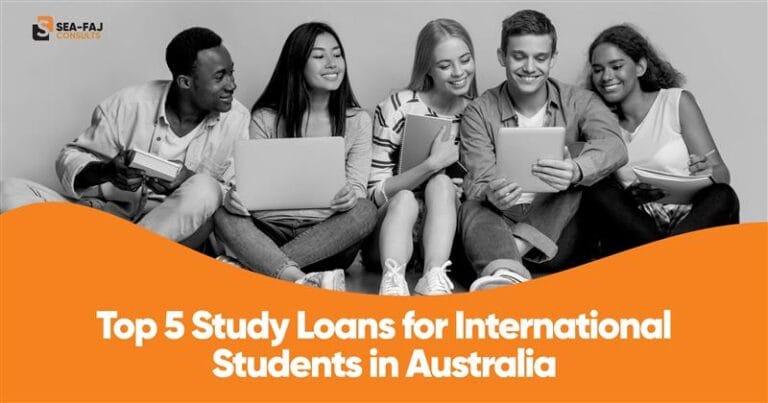
Australia has this charming atmosphere; the sunshine that hits differently, cities buzzing with culture and universities that stand proudly on global rankings. But here’s the thing: while your dreams might be flying Business Class, your bank account is still queuing in Economy.
If you’ve ever held an offer letter from an Australian university and felt both excitement and panic at the same time, you’re in good company. For many Nigerian students, the issue isn’t getting in; it’s figuring out how to pay for it all.
That’s where study loans for international students come in. With the right one, you can bridge the gap between acceptance and arrival, between “I wish” and “I’m here”. In this guide, Sea-Faj Consults will walk you through five realistic study loan options in Australia that Nigerian undergraduates and postgraduates have successfully used. In addition, I’ll share tips for getting approval without losing your sanity.
Types of Loan
- Bank Loans: Provided through big banks such as Commonwealth Bank and NAB. Typically need to have a guarantor.
- Private Lenders: MPOWER Financing or Prodigy Finance. Usually do not require collateral but can have higher rates of interest.
- Government-Supported Loans: Rare for non-residents, but some institutions partner with government programs for specific courses.
Common Requirements for Nigerian Applicants
When you apply from Nigeria, you can expect to provide the following:
- A letter of unconditional offer from an Australian university
- Guarantor or collateral information (depending on lender)
- Salary verification or sponsor information
- Current international passport and evidence of visa application
Top 5 Study Loans for International Students in Australia
- Commonwealth Bank International Student Loan
- NAB (National Australia Bank) Student Loan
- Prodigy Finance Loan for Postgraduate Students
- MPOWER Financing (No Collateral Loan)
- Australian Government Education Loan Schemes (via Partnerships)
1. Commonwealth Bank International Student Loan

Commonwealth Bank (CommBank) is one of Australia’s largest and most trusted banks, offering tailored student loans for internationals.
Key Features:
- Flexible repayment periods (up to 7 years after graduation)
- Interest rates starting from competitive levels (varies by credit history)
- Covers both tuition and living expenses
CommBank’s long-standing history with international students means they understand the complexities of applying from abroad. Plus, if you open a student account with them, you may enjoy faster loan processing.
2. NAB (National Australia Bank) Student Loan

NAB is another major Australian bank that supports international students through specialized loan products.
Key Features:
- Competitive interest rates
- Can be used to cover full tuition and accommodation
- Flexible repayment schedules
NAB has partnerships with several Australian universities that can speed up approval if you’re enrolled in one of their partner schools.
3. Prodigy Finance Loan for Postgraduate Students
Prodigy Finance is a game-changer for international students because it doesn’t require collateral or a guarantor. Instead, they base approval on your future earning potential after graduation.
Key Features:
- Loans available for postgraduate programs (master’s and MBA) in specific eligible universities
- No need for collateral or a local guarantor
- Repayment starts 6 months after graduation
- Competitive interest rates adjusted to your career potential
If you’re heading to Australia for postgraduate studies but don’t have property or a guarantor, Prodigy Finance could be your best bet. Many Nigerian students have successfully funded their studies this way, especially in courses like Engineering, Business and IT.
4. MPOWER Financing (No Collateral Loan)
MPOWER Financing is another lender that doesn’t require collateral, cosigners, or credit history from Nigeria. It’s popular among international students who don’t have strong financial backing but can show academic potential.
Key Features:
- Fixed interest rates
- Loans cover tuition, living expenses, and insurance
- Free career support services included
- Repayment begins 6 months after graduation
MPOWER has a soft spot for high-potential students from emerging economies and Nigeria fits right in. Plus, they accept students enrolled in over 400 schools worldwide, including top Australian universities.
5. Australian Government Education Loan Schemes (via Partnerships)

While most Australian government loan programs are for citizens and permanent residents, some universities have partnerships that allow international students to access limited loan or payment schemes.
Key Features:
- Often low or zero interest rates for specific programs
- Directly tied to your university’s finance department
- May allow deferred payment until after your course starts
If your chosen university offers such a scheme, it can be a low-cost way to finance part of your tuition. Always ask the admissions office or financial aid department about available options.
Tips for Increasing Your Loan Approval Chances
1. Pick a guarantor with solid financial credibility
Even though Nigerian credit scores aren’t a big deal in Australia, lenders still want to see that whoever’s backing you has their finances in order. A guarantor with a stable income and clean record can make your application a lot stronger.
2. Tell your story in a strong SOP (Statement of Purpose)
Some lenders want to know more than just numbers; they want to know you. Your SOP is your chance to explain your study plans, career goals, and why you’re a good investment. Don’t make it generic; make it personal and purposeful.
3. Apply early and be paperwork-ready
Loan approvals for international students can drag on for weeks, sometimes longer. Applying early means you have breathing space to fix mistakes, find extra documents, or answer any follow-up questions without last-minute stress.
Common Mistakes to Avoid When Applying for Study Loans

- Skipping the fine print: Those tiny lines about interest rates, grace periods, and repayment terms? They can be the difference between a manageable loan and a financial headache.
- Forgetting about currency swings: The Nigerian Naira can rise or fall against the Australian Dollar, and that can change how much you owe. Build a little buffer into your budget.
- Borrowing more than you need: It’s tempting to take the maximum, but remember, you’ll have to pay it back with interest.
Conclusion
For Nigerian students, studying in Australia isn’t some far-off dream; it’s a real, achievable goal. Whether you’re leaning towards a big bank loan, a no-collateral option like MPOWER or Prodigy, or a university-backed scheme, the key is to approach it smartly.
Apply early. Read the terms twice. Borrow only what you truly need. And if you’re unsure where to start, talk to Sea-Faj Consults; we are here to help you compare your options and navigate the paperwork.
Your seat on that flight to Australia? It could be just one loan approval away.
FAQs
1. Can I get a study loan in Nigeria to study in Australia?
Yes. Several Nigerian banks and international lenders offer loans specifically for overseas education, including Australia.
2. Do I need collateral for all study loans?
Not all. Lenders like Prodigy Finance and MPOWER Financing don’t require collateral or a guarantor.
3. How long does loan approval take for international students?
It can take anywhere from 2 weeks to 2 months, depending on the lender and completeness of your documents.
4. Can I work in Australia while repaying my loan?
Yes. Student visas in Australia allow you to work part-time during your studies and full-time during breaks.
5. Are there loans that cover living expenses as well as tuition?
Yes. Many lenders include living costs, insurance, and even travel in their loan packages.