Studying abroad is a dream for millions of students around the world. For many, it represents better education, global exposure, career growth and long-term opportunities. Yet, one major hurdle stands between aspiration and arrival: the Student Visa Application process.
Every year, talented students lose admission offers or face visa refusals not because they were unqualified, but because they misunderstood requirements, missed timelines or prepared documents incorrectly. Parents and sponsors often feel overwhelmed by changing immigration rules, financial proof expectations and unfamiliar systems.
This comprehensive guide is designed to simplify the journey. Written from the perspective of an experienced international education advisor, it walks you through each stage clearly, practically and confidently. Whether you plan to study in the UK, Canada, the USA, Europe or Australia, this guide will help you move from planning to approval with clarity.
Common Myths About Student Visa Applications
Many applicants believe that strong academics alone guarantee visa approval. Others assume visas are issued on a first-come basis or that embassies favor certain nationalities. In reality, visa decisions are based on documentation accuracy, financial credibility, study relevance, and genuine student intent.
Step 1: Clarify Your Study Abroad Goals

Before filling any forms, the most important step is clarity.
Choosing the Right Country: Each destination offers unique benefits. The UK is popular for shorter degree durations and post-study work options. Canada is attractive for its immigration pathways. The USA offers academic flexibility and research depth. Europe provides affordability in countries like Germany, while Australia combines quality education with strong work rights.
Selecting the Right Course and University: Your course choice must align with your academic background and career goals. Visa officers assess whether your study plan makes sense. A mismatch between previous studies and your chosen program is a common red flag.
Popular Destinations for International Students: Top destinations include universities in the UK, Canada, USA, Australia, Ireland, and selected European countries. Each has specific visa routes, financial requirements, and work conditions that must be understood early.
Step 2: Research Admission Requirements

Understanding admission criteria saves time and prevents rejection.
Academic Requirements: Universities assess transcripts, certificates, and grading systems differently. Some accept HND or foundation pathways, while others require direct degree equivalence.
English Language Tests: IELTS, TOEFL, PTE, and Duolingo are commonly accepted, but score requirements vary by institution and country.
Country-Specific Entry Criteria: For example, UK universities may waive English tests for certain applicants, while Canada often requires verified language proof upfront.
At this stage, you should already be building a realistic application timeline and document checklist. Rushing this phase often leads to mistakes later in the Student Visa Application process.
If you are unsure which country or course best fits your profile, speaking with an experienced study abroad advisor like Sea-Faj Consults can save you months of uncertainty and costly errors.
Step 3: Prepare and Submit University Applications

Once you have clarity on your destination and program, the next critical stage is submitting strong and accurate university applications. This stage directly affects your Student Visa Application because visa officers rely on your admission documents to assess your study intent.
Required Documents: Most universities will request:
- Academic transcripts and certificates
- English language test results
- Statement of Purpose or Personal Statement
- Curriculum Vitae or résumé for postgraduate applicants
- Reference letters
- Copy of international passport
Each document must be consistent. Discrepancies in names, dates, or academic history are common mistakes that later create visa complications.
Application Timelines: Universities operate on rolling admissions or fixed intakes. The UK, Canada, and Australia often have multiple intakes, while the USA follows more rigid cycles. Applying early improves your chances of securing admission, scholarships, and visa appointment slots.
Common Admission Mistakes to Avoid: Some students apply to too many unrelated courses, while others submit weak personal statements copied from the internet. Admissions teams and visa officers easily identify generic content. Your application should clearly explain why the course, country, and institution align with your goals.
Step 4: Secure an Offer Letter
An offer letter is the foundation of your Student Visa Application.
Conditional vs Unconditional Offers: A conditional offer means you must meet specific requirements, such as submitting final results or achieving a higher English score. An unconditional offer confirms that all academic requirements have been met.
Understanding CAS, I-20, and Offer Confirmation Documents: Different countries issue different documents:
- UK universities issue a Confirmation of Acceptance for Studies (CAS)
- US institutions provide an I-20 form
- Canadian schools issue a Letter of Acceptance
- Australian universities confirm enrolment through a CoE
These documents contain details such as tuition fees, course duration, and start dates. Errors must be corrected immediately before proceeding to the visa stage.
Step 5: Plan Your Finances Early

Financial planning is one of the most scrutinized aspects of the Student Visa Application process.
Tuition Fees and Living Costs: In addition to tuition, students must budget for accommodation, feeding, transportation, books, and personal expenses. Visa officers expect applicants to show realistic financial planning.
Proof of Funds Requirements: Most countries require evidence that you can cover tuition and living expenses for a defined period. This may include bank statements, sponsor letters, or education loans. Funds must be traceable, verifiable, and held for the required duration.
Scholarships and Sponsorship Options: Many universities offer merit-based or need-based scholarships. Government scholarships, employer sponsorships, and family sponsorships are also acceptable if properly documented.
Step 6: Pay Required Deposits and Accept Your Offer
Before applying for a student visa, you may need to pay a tuition deposit.
Tuition Deposits: Deposit amounts vary by country and institution. This payment secures your place and often triggers the issuance of visa-related documents such as the CAS or CoE.
Deadlines and Refund Policies: Always understand refund conditions. If a visa is refused, some institutions refund deposits while others deduct administrative fees. Missing deposit deadlines can lead to offer withdrawal.
Step 7: Prepare Your Student Visa Application
This is the most sensitive stage of the entire process.
Student Visa Application Requirements: Although requirements vary by country, most applications include:
- Valid international passport
- Visa application form
- Admission document
- Proof of funds
- Medical or health insurance
- Statement of study purpose
- Academic and professional documents
Accuracy and consistency are critical. Even small errors can result in delays or refusals.
Country-Specific Visa Routes: Examples include:
- UK Student Route Visa
- Canada Study Permit
- US F-1 Visa
- Australia Student Visa Subclass 500
Each route has unique conditions regarding work rights, dependants, and extensions.
Health Insurance and Biometrics: Some countries require upfront health insurance payments, while others deduct fees during visa processing. Biometrics collection is mandatory in most locations.
Step 8: Attend Your Visa Interview or Biometrics Appointment
Not all countries require interviews, but where required, preparation is essential.
Interview Preparation Tips: Visa officers assess your confidence, clarity, and honesty. Be prepared to explain your course choice, funding source, and future plans clearly and consistently.
Common Visa Refusal Reasons: Frequent refusal reasons include weak financial evidence, unclear study progression, inconsistent answers, and missing documents. Many refusals are preventable with professional guidance.
Step 9: Arrange Accommodation and Travel
With visa approval in progress or secured, practical planning begins.
University Accommodation vs Private Housing: University accommodation offers convenience and security, especially for first-year students. Private housing may be cheaper but requires careful vetting.
Pre-Departure Planning: Students should book flights, arrange airport pickup if available, prepare essential documents, and attend pre-departure briefings. Understanding local laws and student responsibilities is vital.
Step 10: Prepare for Arrival and Post-Study Opportunities
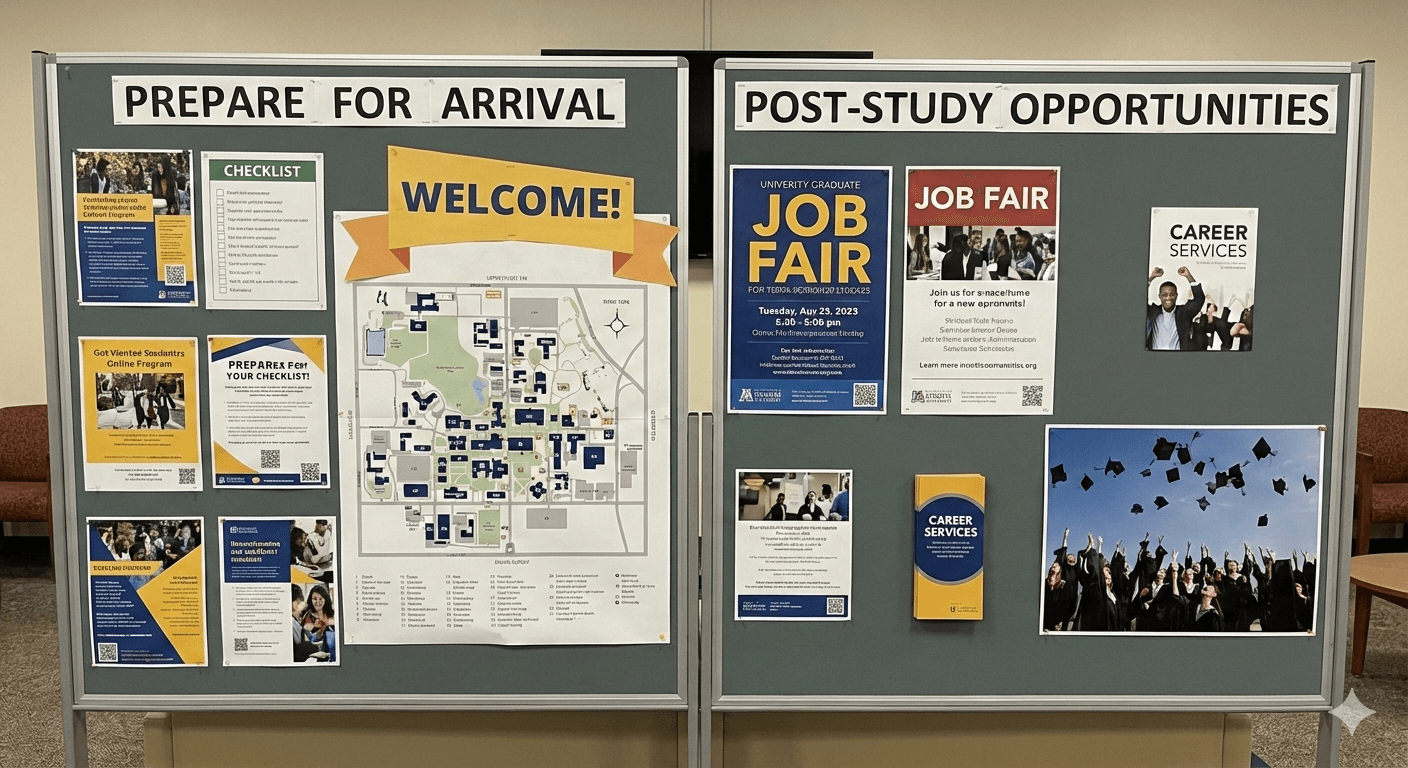
Your journey does not end at arrival.
Orientation and Compliance Rules: Most countries require students to enroll on time, maintain attendance, and comply with work limits. Failure to comply can affect future visa extensions or work opportunities.
Post-Study Work Opportunities
Many destinations offer post-study work visas:
- UK Graduate Route
- Canada Post-Graduation Work Permit
- US Optional Practical Training
- Australia Temporary Graduate Visa
These routes allow students to gain international work experience and explore long-term career pathways.
Conclusion
A successful Student Visa Application is not just about forms and payments. It requires strategy, planning, and accuracy at every stage. From choosing the right course to preparing financial documents and presenting a credible study plan, each step matters.
Working with a trusted education advisory partner reduces risk, saves time, and increases approval confidence.
At SEA-FAJ Consults, we provide end-to-end study abroad support including course selection, university applications, visa processing, financial guidance and pre-departure preparation. Our team understands current visa policies and institutional expectations and works closely with students and sponsors to deliver successful outcomes. Speak with our advisors today and take the next confident step toward your international education journey.
Frequently Asked Questions
1. How long does a student visa application take?
Processing times vary by country but typically range from a few weeks to several months. Applying early is strongly advised.
2. Can I work while studying on a student visa?
Most countries allow limited work hours during term time and full-time work during holidays, subject to visa conditions.
3. What is the minimum bank balance for a student visa application?
This depends on the destination, tuition fees, and living cost requirements. Funds must be genuine and properly documented.
4. Can I apply for a student visa without an admission offer?
No. An official offer or confirmation document from an approved institution is required before submitting a student visa application.
5. What happens if my student visa is refused?
A refusal may allow reapplication or appeal depending on the country. Professional review of refusal reasons significantly improves future outcomes.