
The term Ivy League carries a certain weight. For international students, it represents academic excellence, global prestige, and access to some of the most influential professional networks in the world. While often spoken about as a single entity, the Ivy League is not a country-wide ranking system or a general description of top universities. It is a specific group of eight private institutions in the United States with shared history, standards, and reputation.
For students from outside the US, particularly those from Africa, Asia, and emerging economies, Ivy League schools are often seen as the pinnacle of international education. Yet alongside the prestige comes confusion: what the Ivy League actually is, how admission works, whether funding is realistic, and whether attending one of these schools guarantees career success.
This article breaks down what international students need to know about Ivy League schools today, how they differ from other top universities, what studying there really involves, and how to approach the decision with clarity rather than assumptions.
What Are Ivy League Schools?
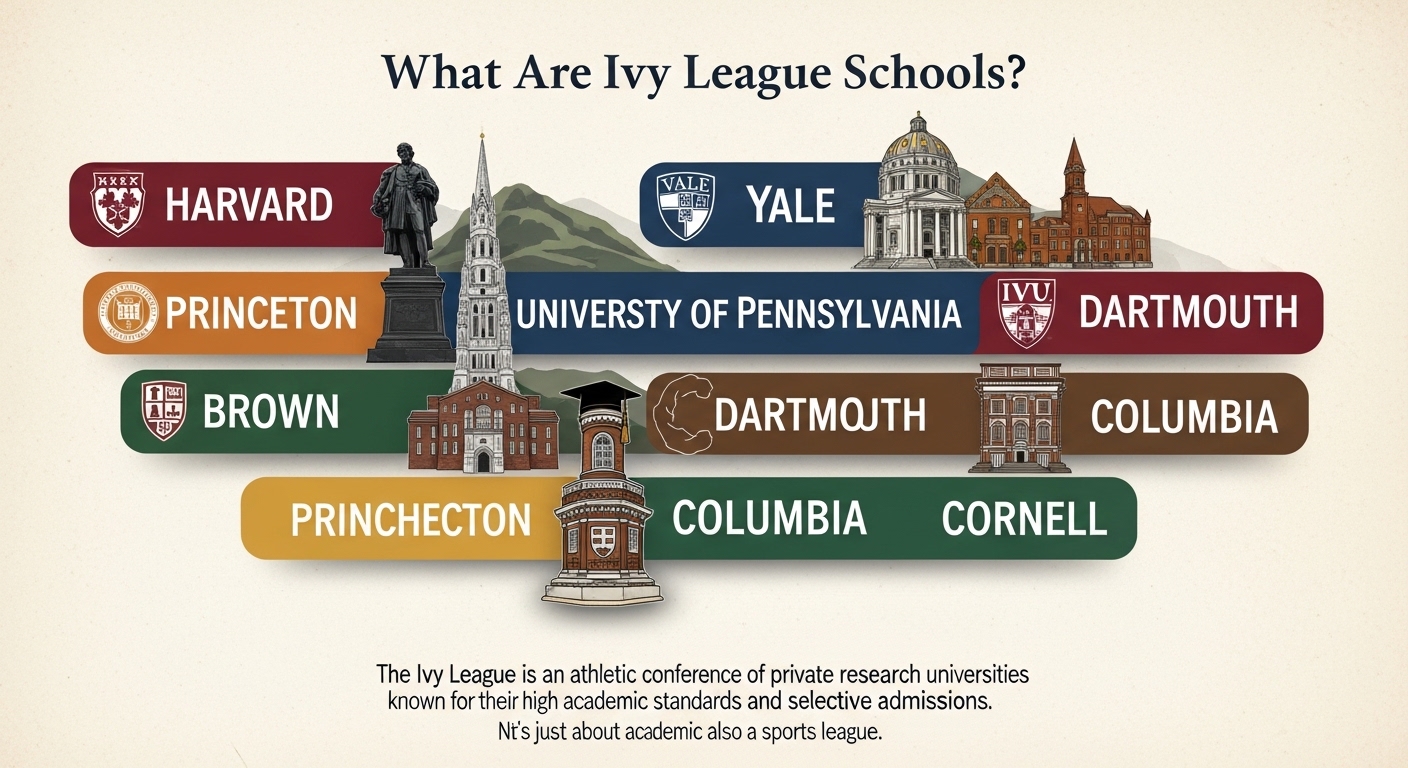
The Ivy League is a group of eight private universities in the United States, originally connected through an athletic conference but now globally recognised for academic excellence and selective admissions.
The eight Ivy League schools are:
- Harvard University
- Yale University
- Princeton University
- Columbia University
- University of Pennsylvania
- Brown University
- Dartmouth College
- Cornell University
These institutions are known for; Rigorous academic standards, Influential alumni networks, Extensive research output, Significant endowments and Highly competitive admissions. It is important to understand that Ivy League is not a synonym for “the best university in the world”. Many non-Ivy institutions rival or exceed Ivy League schools in specific fields, but the Ivy League name remains one of the most recognised in global education.
Why Ivy League Schools Attract International Students
International students are drawn to Ivy League schools for reasons that go beyond rankings.
Global Academic Reputation
An Ivy League degree is recognised worldwide. For students planning international careers, academic mobility, or postgraduate research, the brand recognition carries real value.
Strong Alumni and Professional Networks
Graduates often gain access to alumni communities that influence business, politics, technology, academia, and global organisations. These networks can open doors, though they do not replace merit or effort.
Research and Learning Resources
Ivy League schools are heavily funded. Students benefit from:
- Advanced research facilities
- Access to world-class faculty
- Small class sizes and personalised instruction
- Cross-disciplinary study options
Holistic Education Model
Many Ivy League schools emphasise critical thinking, leadership, and interdisciplinary learning rather than narrow vocational training.
Ivy League vs Other Top Universities
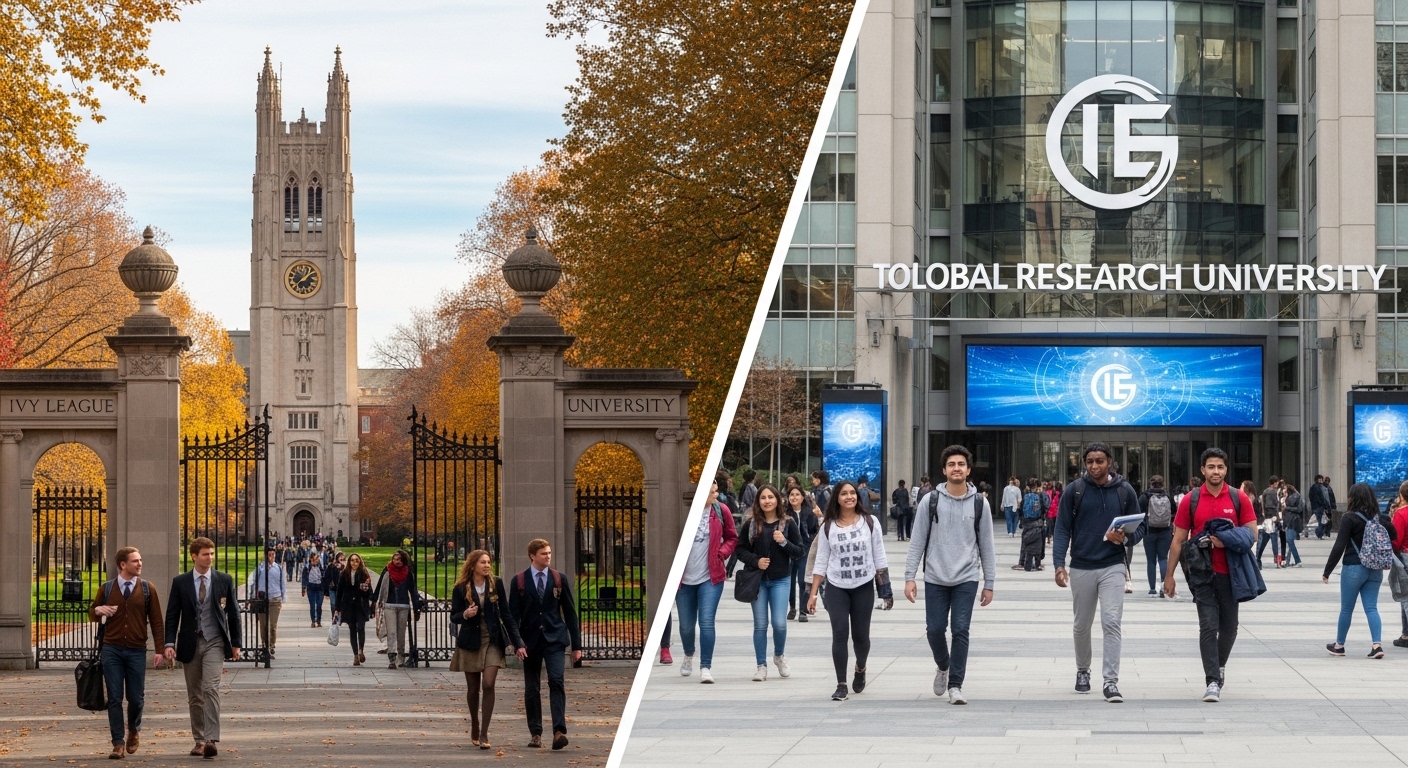
A common misconception is that Ivy League schools are automatically better than all other universities.
In reality:
- MIT, Stanford, Caltech, Oxford, Cambridge, and other institutions often outperform Ivy League schools in specific disciplines.
- Ivy League schools tend to focus on liberal arts foundations combined with research, rather than purely technical specialisation.
- Admission selectivity is influenced by history, alumni connections, and institutional priorities, not only academic performance.
For international students, the “best” school depends on:
- Field of study
- Career goals
- Learning style
- Funding availability
- Immigration and post-study plans
Admission Realities for International Students
Extremely Competitive Acceptance Rates
Ivy League schools admit only a small percentage of applicants, often below 5–7%. International applicants face even tighter competition due to limited international intake quotas.
Holistic Admissions Approach
Admissions decisions are not based solely on grades. Schools assess:
- Academic performance
- Standardised test scores (where required)
- Essays and personal statements
- Extracurricular involvement
- Leadership, initiative, and impact
- Recommendations
- Fit with institutional values
Strong grades alone are rarely enough.
No “Guaranteed” Pathway
There is no guaranteed admission route, regardless of background, country, or financial capacity. Claims suggesting otherwise should be treated with caution.
Financial Considerations and Funding

Tuition and Cost of Attendance
Ivy League schools are expensive, with annual costs often exceeding $80,000 when tuition, housing, insurance, and living expenses are combined.
Financial Aid for International Students
Many Ivy League institutions offer need-based financial aid, even for international students. Some are need-blind, while others are need-aware.
Key points:
- Scholarships are competitive and limited
- Financial documentation is heavily scrutinised
- Aid is based on demonstrated need, not merit alone
Long-Term Financial Planning
Students must consider:
- Currency fluctuations
- Funding sustainability across multiple years
- Restrictions on off-campus work
- Visa-related employment limits
Attending an Ivy League school without a realistic funding plan can lead to serious financial strain.
Academic Expectations and Student Life
High Academic Pressure

The workload is demanding. Students are expected to:
- Engage deeply with coursework
- Participate actively in discussions
- Manage multiple deadlines
- Balance academics with extracurriculars
Support Systems Exist but Initiative Is Required
Ivy League schools provide academic advising, mental health support, and career services, but students must proactively seek help.
Cultural Adjustment for International Students
Adjusting to Classroom participation norms, Independent learning styles, Cultural diversity and Academic integrity standards can take time, especially for students new to the US education system.
Career Outcomes: Expectations vs Reality
An Ivy League degree does not guarantee employment, but it can enhance access.
Graduates often benefit from:
- Strong employer recognition
- Internship pipelines
- Research assistantships
- Graduate school opportunities
However:
- Career success still depends on skills, experience, and performance
- Visa restrictions affect post-study employment options
- Networking requires active participation
International students must plan early for internships, Optional Practical Training (OPT), and long-term career pathways.
Common Misconceptions About Ivy League Schools

- “Only geniuses get in”
Academic excellence matters, but impact, leadership, and originality are equally important. - “An Ivy League degree guarantees success”
It provides opportunity, not certainty. - “All Ivy League schools are the same”
Each institution has its own culture, strengths, and priorities. - “International students cannot afford Ivy League schools”
Some can, through aid and careful planning but it requires transparency and preparation.
Who Should Consider Ivy League Schools?

Ivy League schools may be suitable if you:
- Thrive in academically demanding environments
- Have strong academic and extracurricular records
- Are prepared for competitive admissions
- Have realistic funding strategies
- Value global academic exposure
They may not be ideal if your priority is:
- Low-cost education
- Guaranteed employment outcomes
- Highly vocational or technical-only training
Planning Beyond Prestige

Choosing a university should not be based on name alone. International students benefit most when they evaluate:
- Programme quality
- Career alignment
- Immigration pathways
- Financial sustainability
- Personal learning style
Prestige should support your goals, not define them.
Conclusion
Ivy League schools represent academic excellence, global recognition, and access to influential networks. For international students, they offer extraordinary opportunities but also demand clarity, preparation, and realism.
Understanding what Ivy League schools truly offer, what they do not guarantee, and how they fit into long-term academic and career plans is essential. When approached thoughtfully, they can be transformative. When approached blindly, they can become overwhelming.
If you are exploring international education pathways and considering elite institutions like the Ivy League, informed decision-making matters.
SEA-FAJ Consults supports students in evaluating global study options realistically, focusing on academic fit, funding clarity, and long-term outcomes rather than prestige alone.
📩 Book a free consultation to discuss your study plans with clarity and confidence.