If you are a Nigerian or African student preparing to apply for study abroad or a scholarship, chances are you have already heard how important a reference letter is. Yet many applicants still underestimate it. A well-written reference letter sample for student applications can quietly make the difference between an acceptance email and a rejection notice. In this guide, I will walk you through what makes a strong reference letter and who should write it and share a practical reference letter sample for student applicants that you can adapt confidently.
Let us be honest for a moment. You may have excellent grades, a solid personal statement, and a clear study plan. But if your reference letter is vague, rushed, or generic, it weakens your entire application. Admission officers read thousands of applications. A strong reference letter gives them a human perspective of you beyond grades and certificates.
Difference between academic and professional reference letters
| Aspect | Academic Reference Letter | Professional Reference Letter |
| Focus | Performance in an educational setting | Work ethic, leadership, and professional growth |
| Content Highlights | Coursework, research ability, critical thinking, class participation, academic discipline | Communication skills, problem-solving, initiative, collaboration, leadership |
| Common Use | Undergraduate, postgraduate, and research programs | MBA programs, professional courses, and some scholarships |
| Purpose | Demonstrates academic ability and potential for study | Demonstrates professional competency and suitability for advanced programs |
| Referee | Lecturer, professor, project supervisor | Employer, supervisor, mentor |
Reference Letter Sample for Student Applying to Study Abroad or Scholarships
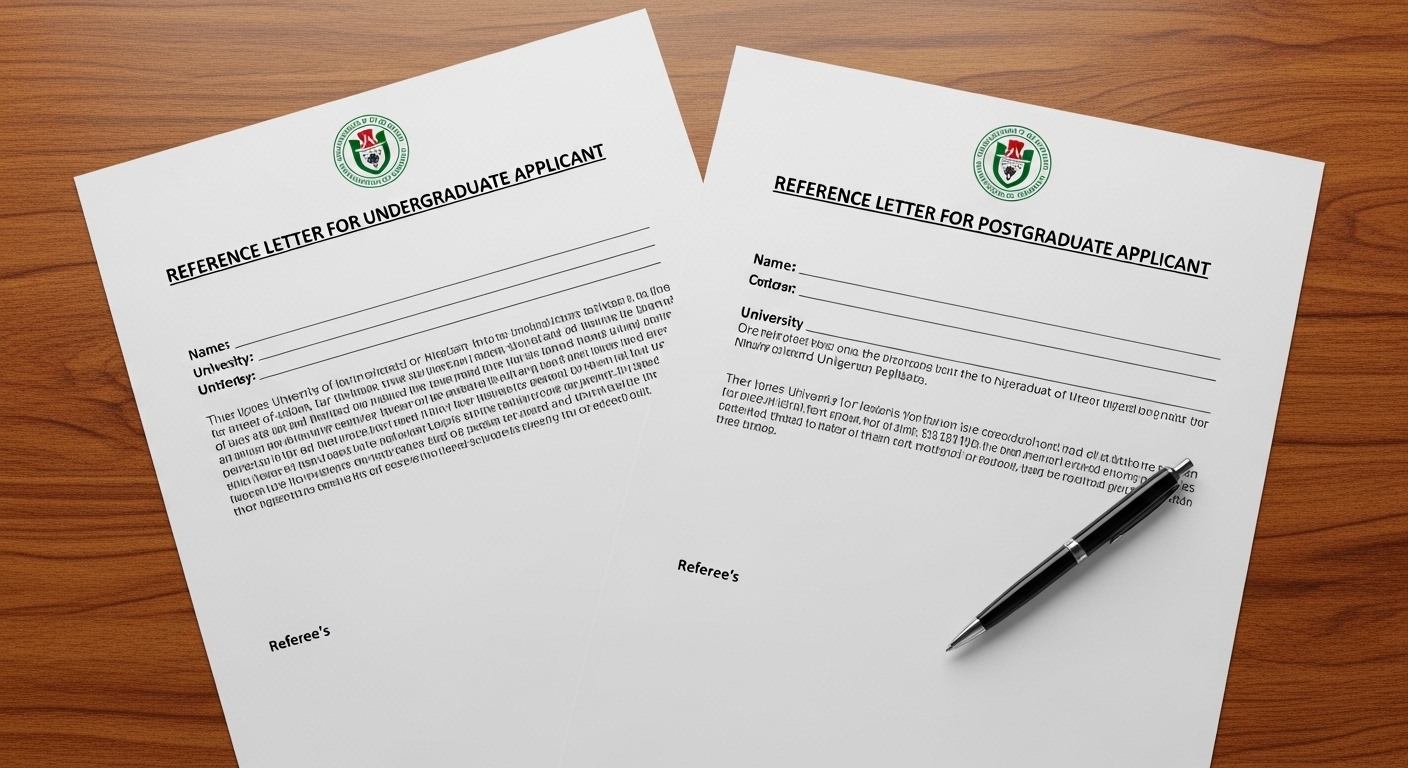
Before you copy and paste anything, let me be clear about one thing. A reference letter sample for student applications is a guide, not a script. Admission officers can easily spot letters that sound recycled. The goal is to adapt the structure and tone while keeping the content specific to the student.
How to use this reference letter sample correctly
Share the sample with your referee early. Highlight key achievements you want them to emphasize. Provide your CV, personal statement, and details of the course or scholarship. This helps the referee personalise the letter while maintaining a professional structure.
Now, here is a practical and editable reference letter sample for student use.
Editable Reference Letter Sample for Student (Kindly include the necessary details in the spaces indicated.)
To Whom It May Concern,
I am pleased to write this letter of reference for [Student’s Full Name], whom I have known for [duration] in my capacity as [lecturer/supervisor/manager] at [institution or organization].
During this period, [Student’s Name] consistently demonstrated strong academic ability, intellectual curiosity, and a genuine commitment to personal and professional growth. As a student in my [course or department], they displayed an impressive ability to grasp complex concepts and apply them thoughtfully in assignments, discussions, and projects.
One quality that stands out is [his/her/their] discipline and sense of responsibility. On several occasions, [Student’s Name] took initiative beyond what was required, whether by leading group projects, contributing original ideas during class discussions, or supporting peers to achieve collective success. These actions reflect a maturity and leadership potential that is uncommon at this stage.
In addition to academic strength, [Student’s Name] possesses excellent communication skills and a strong ethical foundation. I observed this particularly during [specific example such as research work, presentation, internship, or project], where [he/she/they] handled challenges with confidence and professionalism.
I am confident that [Student’s Name] will thrive in an international academic environment and make meaningful contributions to [host institution or scholarship community]. I strongly recommend [him/her/them] for admission and for any scholarship consideration for which they may be eligible.
Should you require further information, please feel free to contact me.
Yours sincerely,
[Referee’s Full Name]
[Title]
[Institution or Organization]
[Official Email Address]
[Phone Number]
Common Mistakes Students Make With Reference Letters

Even with a good reference letter sample for student applications, mistakes still happen.
- Choosing the wrong referee: One of the most common errors I see at Sea-Faj Consults is students choosing popular or senior figures who barely know them. A detailed letter from a junior lecturer who knows your work well is far more powerful than a vague letter from a professor who does not remember you.
- Submitting generic or poorly written letters: Another issue is submitting letters that sound generic. Admission panels read hundreds of applications. If your letter could apply to anyone, it adds no value.
Final Checklist Before Submitting Your Reference Letter
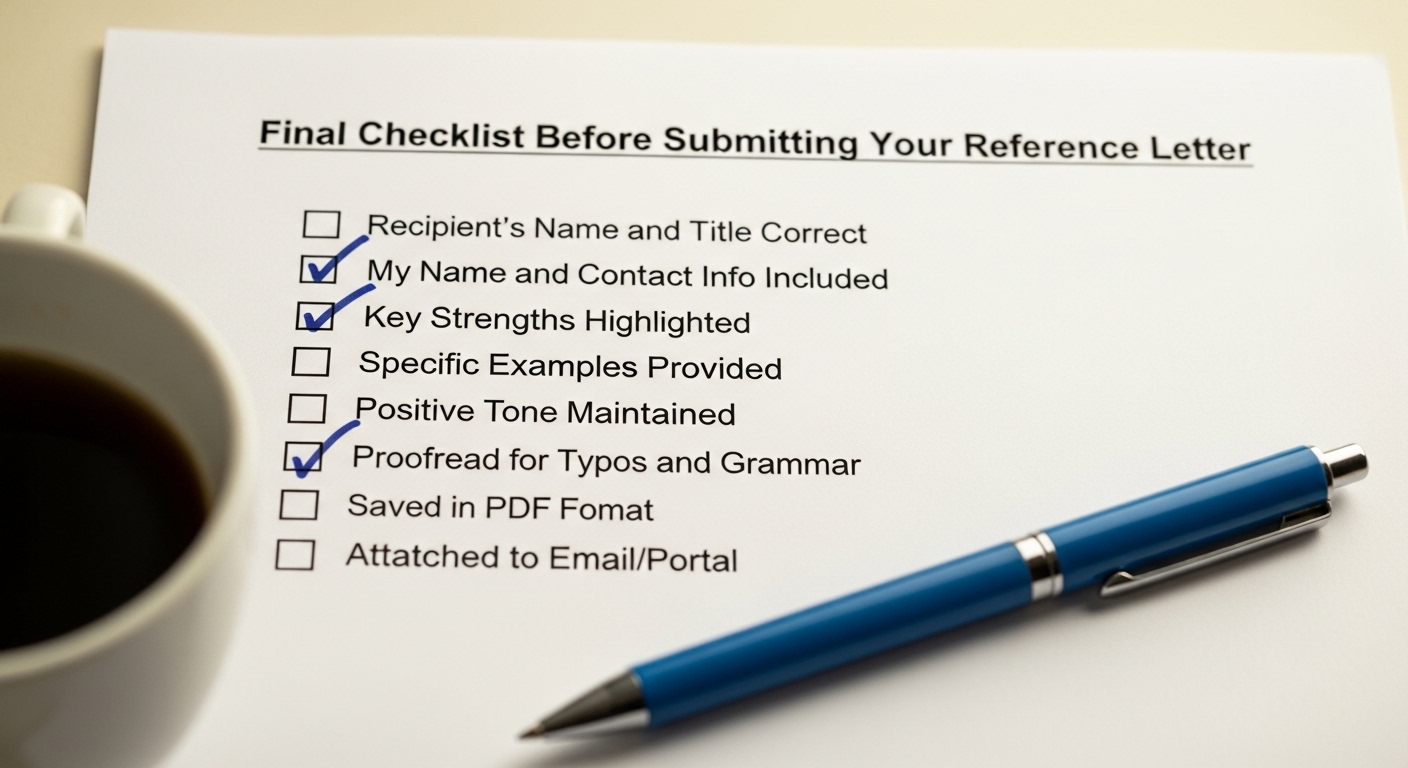
Confirm that the referee’s details are correct and professional.
Ensure the letter aligns with your chosen course or scholarship.
Check that examples are specific, not generic.
Verify submission format and deadlines.
Proofread for grammar and clarity.
Difference Between Recommendation Letter and Reference Letter for Study Abroad Applications
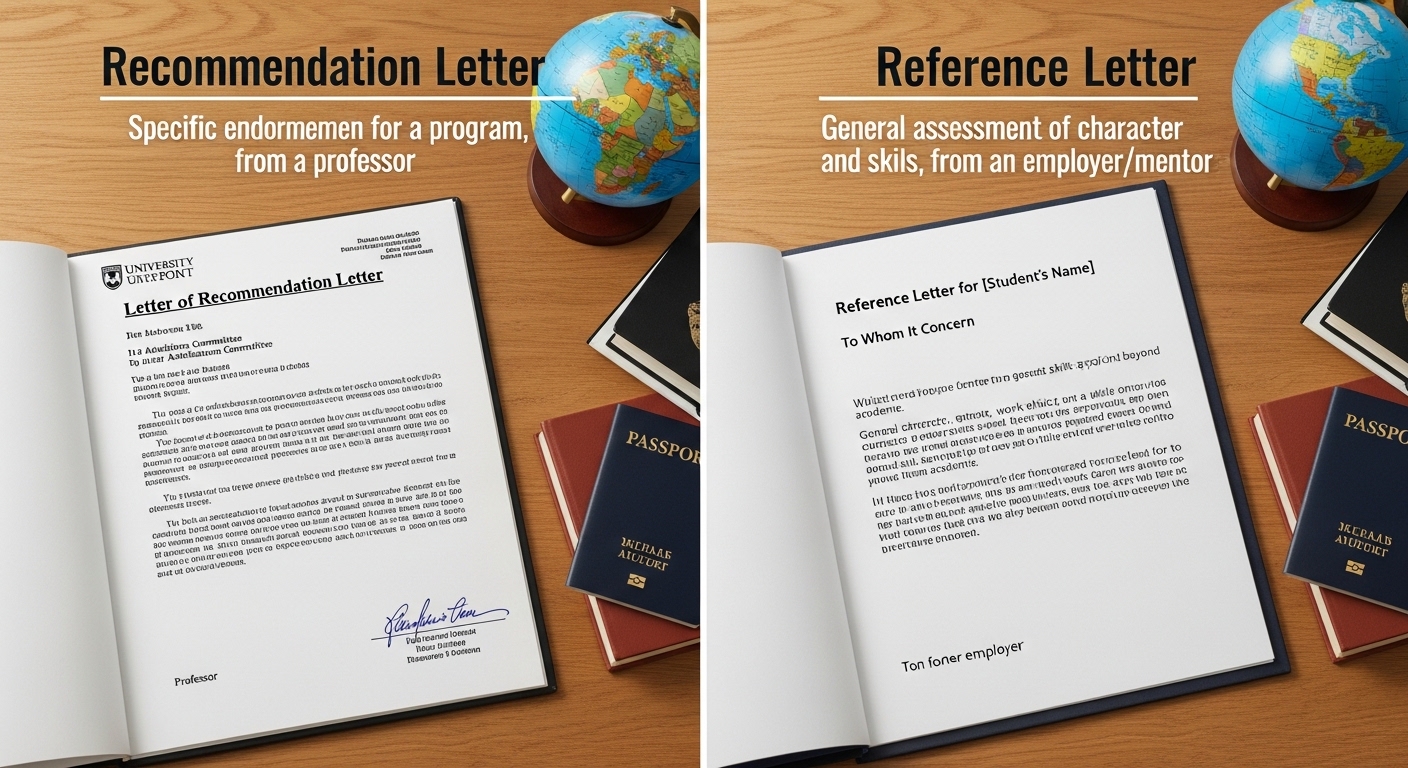
Many students applying to study abroad or for scholarships are unsure whether to submit a recommendation letter or a reference letter. While both documents are written by referees, they serve different purposes and are not always interchangeable. Understanding the difference helps you submit the right document and avoid unnecessary rejection.
| Criteria | Recommendation Letter | Reference Letter |
| Primary Purpose | Actively recommends and supports a student for a specific study abroad program or scholarship | Provides an objective evaluation of a student’s academic or professional background |
| How It Is Used | Required for competitive scholarships and selective postgraduate programs | Often requested for general university admissions or supplementary documentation |
| Tone | Strong, persuasive, and endorsement-driven | Neutral, factual, and assessment-based |
| Level of Advocacy | The referee clearly states why the student deserves the opportunity | Moderate. The referee confirms competence and character without strong persuasion |
| Focus of Content | Academic excellence, leadership potential, suitability for the program | Performance, behaviour, skills, and reliability |
| Customization | Written specifically for a particular university or scholarship | Can be reused across multiple applications |
| Common Phrases Used | “I strongly recommend”, “I have no hesitation in endorsing” | “I can confirm”, “Based on my observation” |
| Best For | Fully funded scholarships, research-based programs, highly competitive admissions | Study abroad admissions, visa support documents, or employment-related checks |
Conclusion
A strong reference letter can elevate your study abroad or scholarship application in ways your grades alone cannot. When written correctly, it reinforces your story, strengthens your credibility, and positions you as a serious candidate. Using a well-structured reference letter sample for student applications helps both you and your referee avoid costly mistakes.
If you are unsure how to guide your referee or want expert support reviewing your reference letters, Sea-Faj Consults is your trusted partner. Our team provides personalized counselling, document reviews, and end-to-end study abroad support. Reach out today to book a consultation or request a complete application guide tailored to your goals.
FAQs
- How many reference letters do I need for study abroad applications?
Most universities require one to three reference letters, depending on the program and country. - Can I write my own reference letter?
Some referees may ask you to draft it, but it must reflect their voice and be reviewed and approved by them. - Is an academic reference always better than a professional one?
Not always. It depends on the program. Research-based courses prefer academic references, while professional programs may accept work references. - Can the same reference letter be used for multiple applications?
Yes, but it should be slightly tailored to match each program or scholarship. - What format should a reference letter be in?
Most institutions accept PDF uploads or direct submission through an application portal.