Every Nigerian business leader has a bad hire story. The candidate who looked perfect on paper but struggled in the role. The new manager who demoralised a high-performing team within three months. The executive hire that cost millions in recruitment fees, onboarding, and training, only to exit within a year. These stories are more common than anyone likes to admit, and in 2026, the financial and operational consequences of getting recruitment wrong have never been higher.
The conversation about bad hires tends to focus on the immediate cost: the salary paid, the recruitment fee charged, the time lost. But the full picture is far more damaging. Research consistently shows that the total cost of a bad hire, accounting for lost productivity, management time, team disruption, reputational damage, and rehiring expenses can reach two to five times the annual salary of the role in question. For senior positions, that multiplier climbs even higher.
At Sea-Faj Consults, our HR consultancy and recruitment services are built around one central goal: helping Nigerian businesses hire the right people the first time, every time. This guide breaks down the true cost of a bad hire in the Nigerian context and explains the practical steps that protect your business from one of the most expensive mistakes a growing organisation can make.
What Counts as a Bad Hire?

A bad hire is not simply someone who turns out to be underperforming. It is any recruitment decision that results in a misalignment between the person placed and the role, the team, the culture, or the business’s strategic direction. This can manifest in several ways:
- Skills mismatch: The candidate was assessed against the wrong criteria or their abilities were overstated during the hiring process, and they cannot deliver what the role requires.
- Cultural misfit: The individual’s working style, values, or interpersonal approach conflicts with the team or organisation in ways that create friction, reduce morale, or drive attrition among strong performers around them.
- Motivation misalignment: The candidate took the role as a stepping stone rather than a genuine fit, resulting in disengagement, low output, and early departure.
- Poor onboarding and integration: The hire had potential, but inadequate onboarding, unclear role definition, or lack of management support meant they never had the conditions to succeed.
Each of these scenarios has a different root cause and a different point in the recruitment and onboarding process where it could have been caught and prevented. That is exactly where a structured, professionally managed approach to hiring makes all the difference.
Breaking Down the True Cost: What a Bad Hire Actually Costs a Nigerian Business
1. Direct Recruitment and Replacement Costs
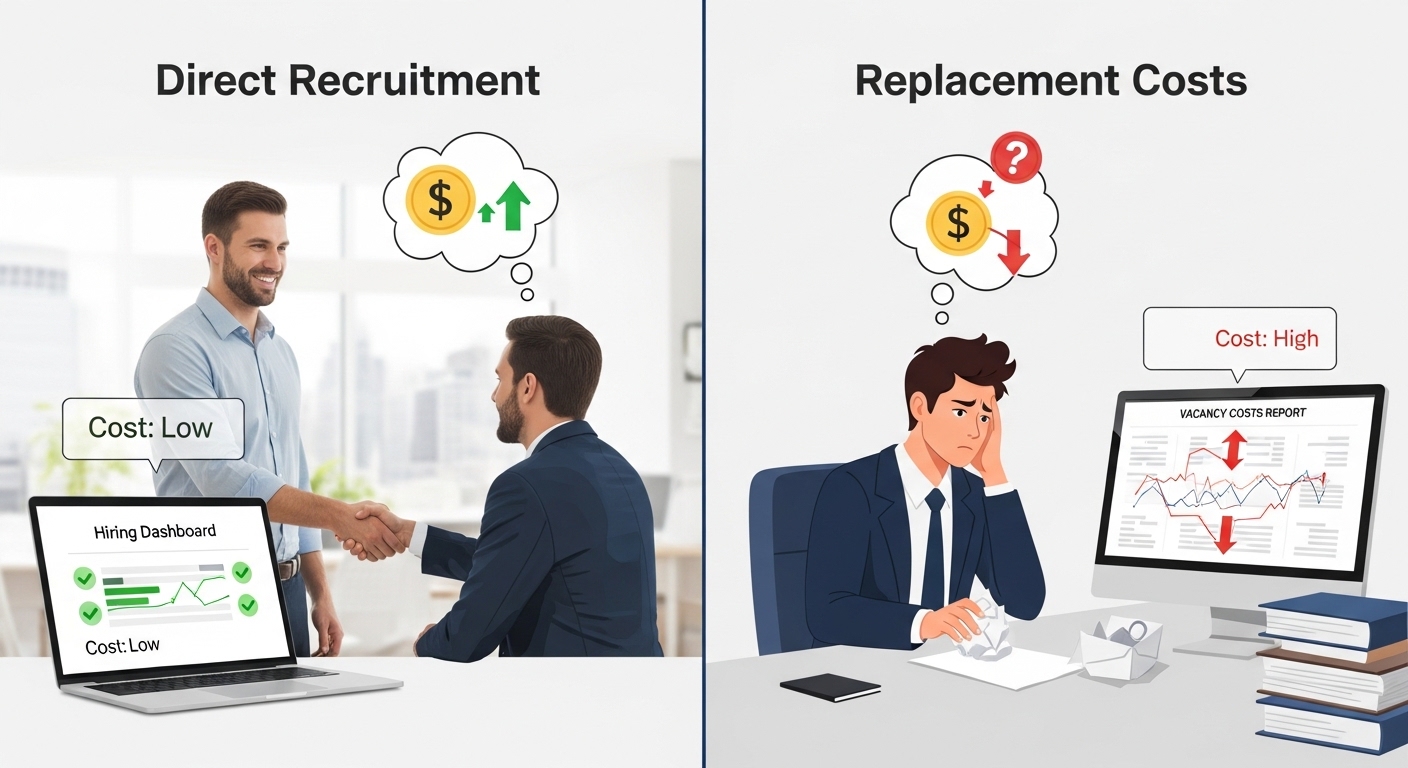
The most visible cost of a bad hire is having to do the recruitment all over again. For a mid-level role in Nigeria’s financial services, technology, or professional services sectors, a full recruitment cycle, job advertising, agency fees, screening, interviewing, and offer management can cost between ₦500,000 and ₦2,000,000 or more depending on seniority and specialisation. When a bad hire exits within twelve months and the cycle repeats, that cost doubles. For senior executive roles, it can be catastrophic.
2. Lost Productivity During the Gap and Ramp-Up Period

Every time a role turns over, there is a productivity gap. The work does not stop existing, it falls to other team members who are already at capacity, to managers who now spend their time covering operational tasks rather than leading strategically, or it simply does not get done. Research suggests that a new hire typically takes three to six months to reach full productivity even in the best circumstances. A bad hire who is disengaged, misaligned, or being managed out adds weeks or months to that timeline while actively reducing the output of the people around them.
3. Management Time and Leadership Distraction

One of the most underestimated costs of a bad hire is the toll it takes on leadership. Managing a struggling employee, through performance reviews, PIPs, difficult conversations, disciplinary processes, and ultimately termination, consumes enormous amounts of time that should be invested in strategy, growth, and the development of your high-performing team members. In a growing Nigerian business where leadership capacity is often already stretched, this distraction is particularly damaging.
4. Team Morale and Talent Retention Risk
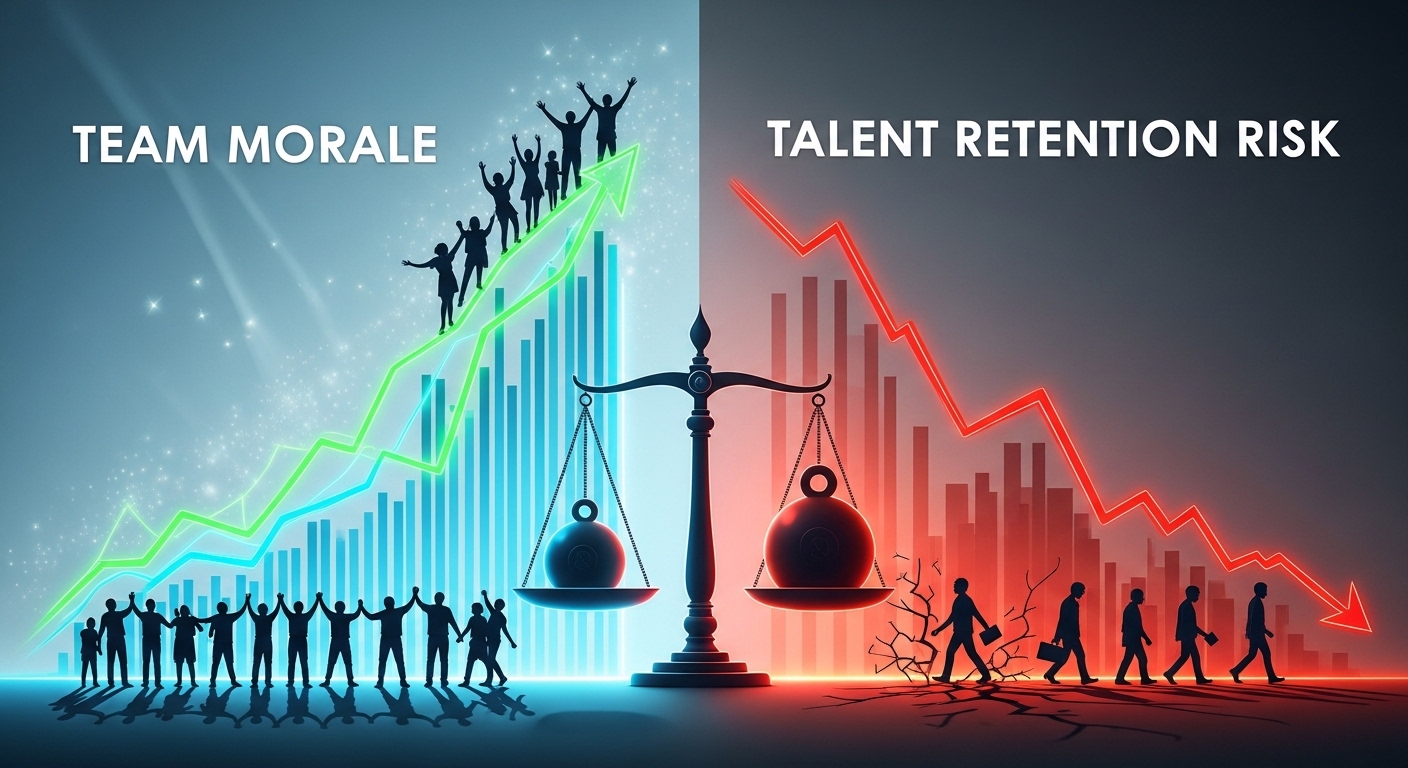
A bad hire does not suffer alone, the people around them do too. High-performing team members consistently report that working alongside underperformers is one of the most demotivating workplace experiences they encounter. When your best people see that poor performance is tolerated, or that the hiring process brings in candidates who are not at their level, it raises questions about the organisation’s standards and leadership. In Nigeria’s increasingly competitive talent market, where skilled professionals in technology, finance, healthcare, and logistics have more options than ever, losing a strong employee because a bad hire disrupted their team is a compounding cost that extends well beyond the original recruitment mistake.
5. Client Impact and Reputational Risk

For businesses where employees have direct client contact, consultancies, financial services firms, hospitality businesses, healthcare providers, and many more, a bad hire can directly damage client relationships. A poorly matched account manager, a disengaged customer service team member, or an underqualified technical consultant can cost you not just one client, but the referrals and repeat business that client would have generated. In Nigeria’s relationship-driven business culture, where reputation moves fast through professional networks, this risk is real and significant.
Why Bad Hires Happen
Bad hires are rarely the result of bad luck. They are almost always the result of a flaw somewhere in the hiring process. The most common root causes we see in the Nigerian market include:
- Rushing to fill a vacancy: Urgency drives shortcuts. When a business needs someone in a role immediately, the temptation is to move quickly rather than thoroughly, compressing assessments, skipping reference checks, and lowering the bar. The result is a hire that solves the short-term problem while creating a longer-term one.
- Poorly defined job briefs: If the brief does not accurately capture what the role truly requires, in terms of skills, behaviours, experience level, and cultural fit, then the search is optimised for the wrong candidate from the outset. Vague briefs produce misaligned shortlists.
- Over-reliance on CVs and interviews: A polished CV and a confident interview performance are not reliable predictors of on-the-job success. Without structured competency assessments, scenario-based evaluation, and genuine reference verification, the selection process is too easy to game.
- Inadequate candidate pool: When sourcing is limited to one channel, a job board, a quick LinkedIn post, or word of mouth, the shortlist reflects the limitations of the search rather than the breadth of available talent. The right candidate may exist but never see the vacancy.
- No structured onboarding: Even a genuinely strong hire can become a bad outcome if they are not properly integrated into the team, given clear goals, and supported in their first ninety days. Onboarding failure is a hidden driver of early attrition that often gets misattributed to the hiring process.
How Sea-Faj Consults Protects You from Bad Hires

Our recruitment and HR consultancy approach is specifically designed to address every stage of the hiring process where bad hires originate. We do not simply post jobs and submit CVs. We act as a genuine talent partner, bringing rigour, structure, and market knowledge to bear at every step.
We begin with a detailed briefing process that goes beyond the job description to understand the team dynamics, reporting relationships, performance benchmarks, and cultural characteristics of the environment the candidate will enter. This brief becomes the foundation for a sourcing strategy that accesses the right talent pool, whether through our active candidate pipelines, our professional networks, or targeted direct sourcing across platforms.
Our screening process combines competency-based evaluation with scenario assessments and structured reference verification. We do not present candidates we have not rigorously assessed, and we stand behind every placement with a replacement guarantee for resignations or dismissals within the agreed warranty period. This means our incentive is always aligned with yours: long-term placement success, not short-term placement volume.
For businesses that want to go further, our HR consultancy services extend into onboarding support, performance framework design, and talent retention strategy, helping you build the organisational conditions in which good hires thrive and bad hires are identified early rather than late.
Conclusion
A bad hire in 2026 is an expensive mistake that no growing Nigerian business can afford to take lightly. The direct costs are significant. The indirect costs to productivity, morale, client relationships, and your ability to attract and retain talent are even greater. But bad hires are not inevitable. They are the predictable outcome of a flawed process, and a structured, professionally managed recruitment approach eliminates the vast majority of the risk.
Sea-Faj Consults exists to give Nigerian businesses access to that structured approach, whether you are filling a single critical role or building an entire team. Our HR consultancy and recruitment services are designed to find not just qualified candidates, but the right candidates: people whose skills, motivations, and working style align with your organisation’s needs and values.
Stop paying the price of bad hires. Partner with Sea-Faj Consults for recruitment that gets it right the first time. Visit sea-fajconsult.com/contact us or speak with our HR consultancy team today.
Frequently Asked Questions
1. How much does a bad hire actually cost in Nigeria?
The direct and indirect costs of a bad hire in Nigeria typically range from two to five times the annual salary of the role, when you factor in recruitment and replacement costs, lost productivity, management time, and the impact on team morale. For senior roles, executives, department heads, or specialist technical hires, the multiplier can be significantly higher. A ₦6,000,000 annual salary role can carry a total bad-hire cost of ₦12,000,000 to ₦30,000,000 when all factors are properly accounted for.
2. What is the difference between recruitment and HR consultancy?
Recruitment focuses on finding, assessing, and placing the right candidates for specific vacancies. HR consultancy is broader, it covers the frameworks, processes, and organisational design that determine how effectively your business attracts, manages, and retains talent. Sea-Faj Consults offers both. Our HR consultancy work helps clients build the hiring processes, performance management systems, and onboarding structures that prevent bad hires from occurring, while our recruitment service delivers the candidates themselves.
3. How does Sea-Faj Consults screen candidates to avoid bad hires?
Our screening process goes well beyond CV review. We conduct structured competency-based interviews aligned to the specific requirements of each role, use scenario and behavioural assessments to evaluate how candidates approach real-world challenges, and conduct verified reference checks with previous employers. For senior roles, we may also conduct attitude testing and more in-depth profiling. Every candidate we present has been rigorously evaluated against the brief we agreed with you at the outset.
4. What happens if a candidate Sea-Faj places turns out to be a bad hire?
We stand behind every placement with a replacement guarantee. If a candidate we place resigns or is dismissed within the agreed warranty period, we replace them at no additional recruitment fee. This guarantee reflects our confidence in our screening process and aligns our interests directly with yours, we succeed only when you do. The specific terms of our replacement guarantee are discussed and agreed at the point of engagement.
5. Can Sea-Faj Consults help us improve our internal hiring process?
Yes. Our HR consultancy services include a full audit of your existing recruitment and onboarding processes, identifying the specific points where bad hires are most likely to enter and proposing practical improvements. We can help you design better job briefs, build structured interview frameworks, implement onboarding programmes that improve early retention, and create performance management systems that identify misalignment quickly when it does occur. Contact us at sea-fajconsult.com/contact to discuss what a tailored HR consultancy engagement would look like for your business.


