
Talent acquisition has evolved beyond simply filling vacancies. In 2026, talent acquisition in Nigeria refers to a structured, strategic approach to identifying, attracting, and retaining skilled professionals who can drive business growth.
Unlike traditional recruitment, which is reactive, talent acquisition is proactive. It focuses on building long-term talent pipelines rather than rushing to fill roles when gaps appear.
Many Nigerian businesses are now shifting to this model because the cost of slow or poor hiring has become too high. Companies are losing productivity, revenue, and competitive advantage due to inefficient hiring systems.
The Hiring Crisis Facing Nigerian Businesses
Across industries, employers are encountering the same recurring problems.
Hiring takes too long. It can take 4 to 8 weeks to fill a mid-level role, especially when internal HR teams are overstretched.
There is a persistent skill mismatch. Many candidates appear qualified on paper but lack practical, job-ready skills.
Wrong hires are expensive. A single poor hiring decision can cost up to 30 percent of the employee’s annual salary when you factor in onboarding, training, and lost productivity.
We have seen companies delay major projects simply because they could not find the right talent fast enough.
How Talent Acquisition Works in Nigeria Today

Modern talent acquisition is a system, not an event.
It begins with workforce planning. Businesses define not just the role, but the exact outcomes expected from that role within the first 3 to 6 months.
Next is talent sourcing. This goes beyond job boards to include talent pools, referrals, and pre-vetted candidates.
Screening is more rigorous. Instead of relying only on CVs, companies now assess candidates using skill tests, case studies, and practical evaluations.
Finally, onboarding is treated as part of acquisition. A poorly onboarded employee can take months to become productive, which defeats the goal of fast hiring.
Key Talent Acquisition Trends in Nigeria (2026)
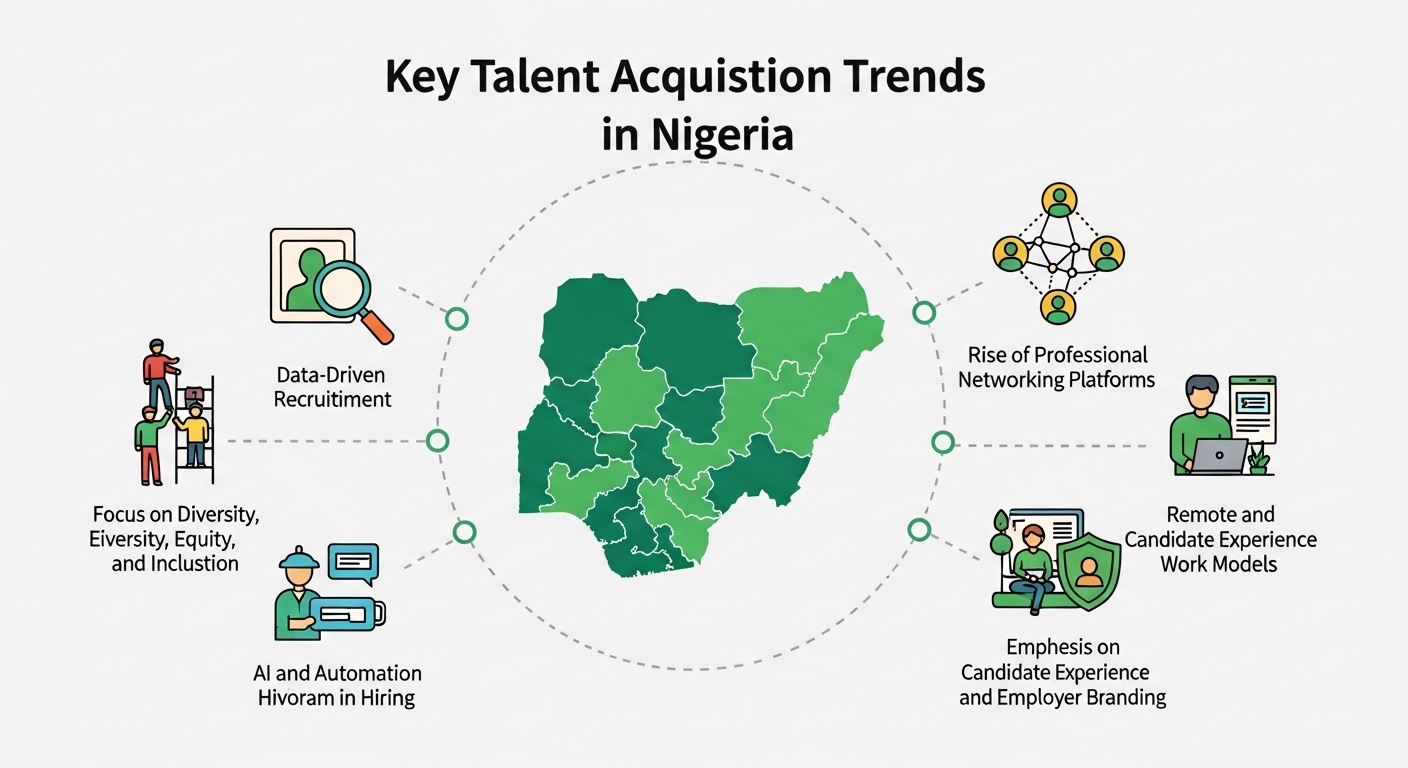
One major shift is the adoption of remote hiring. Nigerian companies are no longer limited to local talent. They are hiring across regions to access better skill sets.
Another trend is recruitment outsourcing. Businesses are partnering with firms like Sea-Faj Consults to handle sourcing, screening, and shortlisting, reducing internal workload.
Data-driven hiring is also gaining traction. Employers now track metrics such as time-to-hire, cost-per-hire, and candidate quality to improve decision-making.
Step-by-Step Talent Acquisition Process for Fast Hiring

To hire efficiently, businesses must follow a structured approach.
First, define the role clearly. This includes responsibilities, required skills, and measurable success indicators.
Second, attract the right candidates. This involves writing compelling job descriptions and positioning your company as an attractive employer.
Third, implement a fast screening process. Delays at this stage often lead to losing top candidates to competitors.
Fourth, conduct structured interviews focused on performance, not just personality.
Finally, onboard effectively to ensure new hires become productive within weeks, not months.
In-House Hiring vs Outsourcing Talent Acquisition
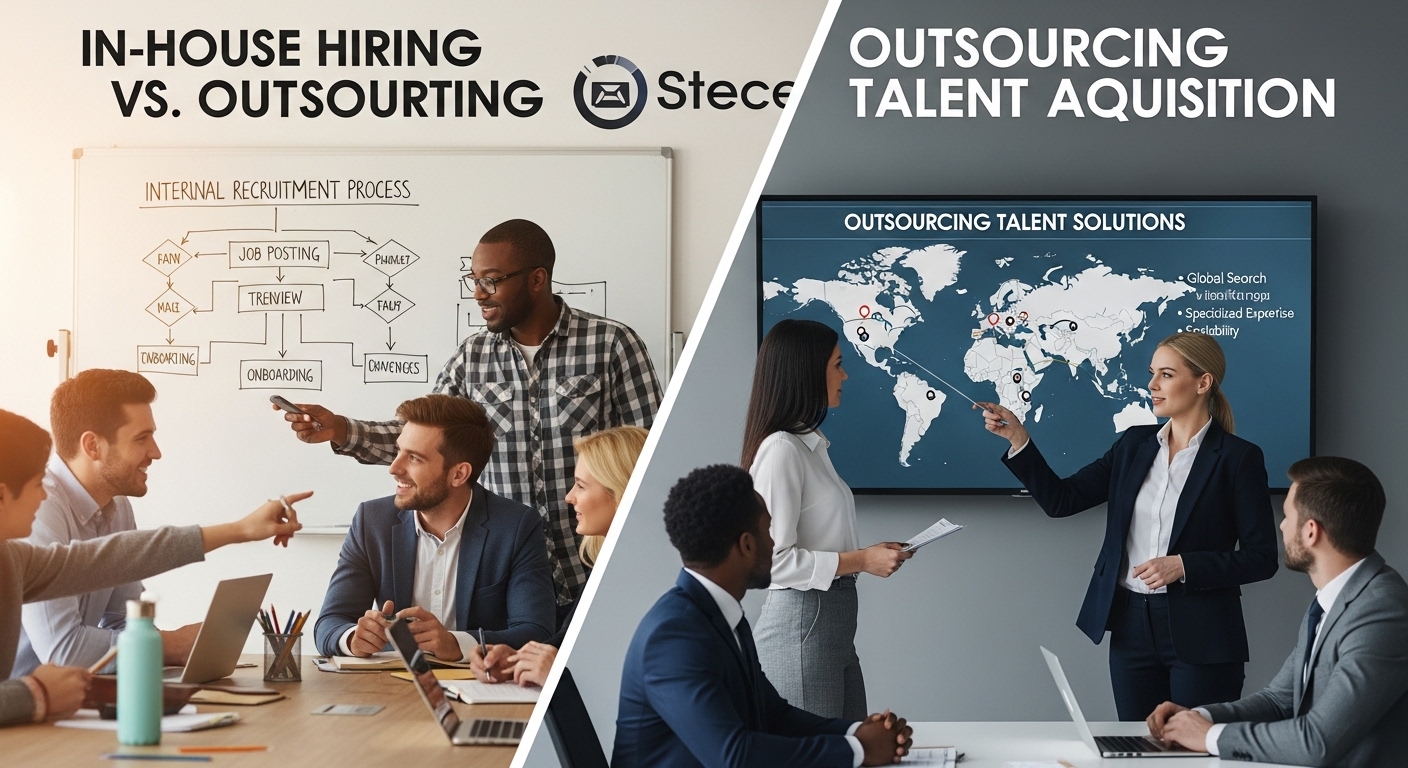
Many businesses struggle to decide whether to manage hiring internally or outsource it.
| Factor | In-House Hiring | Outsourced Talent Acquisition |
| Speed | Slower | Faster |
| Cost | High fixed cost | Flexible cost |
| Talent Access | Limited | Wider talent pool |
| Expertise | Depends on HR team | Specialized recruiters |
| Scalability | Limited | Highly scalable |
Cost Comparison: In-House Hiring vs Outsourced Talent Acquisition
Understanding the financial implications is critical when choosing a hiring model. Many businesses underestimate the hidden costs of in-house recruitment.
| Cost Element | In-House Hiring (Estimated) | Outsourced Talent Acquisition (Estimated) |
| Job Advertising | High recurring spend | Included or optimized |
| HR Salaries | Fixed monthly cost | Not required |
| Screening Tools | Paid subscriptions | Included |
| Time Cost | High management involvement | Minimal internal effort |
| Cost of Bad Hire | Very high | Reduced through vetting |
In practical terms, outsourcing often reduces total hiring costs by 20 to 40 percent, especially for growing companies hiring multiple roles.
We have seen SMEs in Nigeria cut hiring expenses significantly by shifting to structured outsourcing models rather than expanding internal HR teams prematurely.
Hiring Timelines: Traditional vs Modern Talent Acquisition
Speed is one of the biggest differentiators.
| Hiring Stage | Traditional Recruitment | Modern Talent Acquisition |
| Job Posting to Applications | 1 to 2 weeks | 2 to 5 days |
| Screening | 1 to 2 weeks | 3 to 5 days |
| Interviews | 1 to 2 weeks | 3 to 7 days |
| Offer & Acceptance | 1 week | 2 to 4 days |
| Total Time-to-Hire | 4 to 8 weeks | 1 to 3 weeks |
Businesses that adopt structured talent acquisition strategies consistently reduce hiring time by over 50 percent.
Common Hiring Mistakes Businesses Make

Many companies struggle not because of lack of candidates, but because of flawed hiring approaches.
- Hiring based on urgency instead of fit: When roles remain open for too long, businesses rush decisions. This often leads to underperformance and high turnover.
- Poor job descriptions: Vague or generic job postings attract unqualified candidates, increasing screening time and frustration.
- Ignoring employer branding: Top candidates evaluate your company as much as you evaluate them. Weak brand positioning reduces your ability to attract quality talent.
- Over-reliance on CVs: A polished CV does not guarantee competence. Practical assessments are essential.
- Delayed decision-making: Strong candidates do not stay available for long. Delays often result in losing top talent to faster competitors.
How Outsourcing Solves Hiring Delays
Outsourcing introduces structure, speed, and expertise into the hiring process.
Specialized recruitment partners already have access to pre-vetted talent pools. This eliminates the need to start sourcing from scratch.
They also implement standardized screening frameworks. This ensures that only qualified candidates reach the interview stage.
Most importantly, outsourcing reduces internal bottlenecks. Your management team can focus on core business operations instead of spending hours reviewing applications.
Companies working with firms like Sea-Faj Consults often move from reactive hiring to proactive workforce planning.
Real Business Scenario: Hiring Gone Wrong
A Lagos-based startup needed a digital marketing manager urgently. They rushed the process, relying heavily on CV reviews and a single interview.
Within two months, performance issues became obvious. Campaigns underperformed, and deadlines were missed.
The company had to restart the hiring process, losing both time and revenue.
In contrast, when they later adopted a structured talent acquisition approach with external support, they filled the same role within two weeks with a candidate who delivered measurable results within the first month.
This pattern is common. The cost of doing it wrong is always higher than the cost of doing it right.
How Sea-Faj Consults Supports Fast Talent Acquisition
Sea-Faj Consults operates as a strategic hiring partner, not just a recruitment agency.
We help businesses define roles clearly, ensuring alignment with business goals.
We provide access to pre-screened, job-ready candidates across multiple industries.
We also streamline the entire hiring process, from sourcing to onboarding, reducing time-to-hire significantly.
For growing businesses, this means faster scaling without the operational burden of managing recruitment internally.
ROI of Effective Talent Acquisition

Investing in the right hiring strategy produces measurable returns.
- Faster productivity: Employees who are properly matched to roles perform faster and require less supervision.
- Reduced turnover: Better hiring decisions lead to higher retention rates.
- Improved team performance: Strong hires elevate overall team output and morale.
- Lower long-term costs: Fewer hiring mistakes mean fewer resources spent on replacements.
From an operational standpoint, talent acquisition is not just a hiring function. It is a growth strategy.
To strengthen your hiring system further, consider exploring related areas such as:
- CV evaluation frameworks for employers
- Interview structuring techniques for better candidate assessment
- Talent sourcing strategies for competitive industries
- Remote workforce management for distributed teams
These areas complement talent acquisition and improve overall hiring outcomes.
Conclusion
Talent acquisition in Nigeria in 2026 is no longer optional for businesses that want to grow quickly and competitively.
The difference between companies that scale efficiently and those that struggle often comes down to how they hire.
A structured, strategic approach enables faster hiring, better talent quality, and stronger business performance.
If your business is experiencing hiring delays or struggling to find the right talent, the solution is not more effort. It is a better system.
Partnering with experts like Sea-Faj Consults allows you to access skilled professionals faster while reducing cost and risk.
The next phase of your growth depends on the quality of people you bring in. Make that decision strategically.
FAQs
1. What is talent acquisition and how is it different from recruitment?
Talent acquisition is a long-term strategy focused on attracting and retaining skilled professionals, while recruitment is typically a short-term effort to fill immediate vacancies.
2. How long does it take to hire talent in Nigeria?
Traditional hiring can take 4 to 8 weeks, while modern talent acquisition strategies can reduce this to 1 to 3 weeks.
3. Is outsourcing recruitment cost-effective for small businesses?
Yes. Outsourcing reduces fixed HR costs and improves hiring efficiency, making it more cost-effective for growing businesses.
4. What industries benefit most from talent acquisition services?
Industries such as tech, finance, marketing, healthcare, and outsourcing services benefit significantly due to high demand for skilled professionals.
5. How can I improve my company’s hiring speed?
Define roles clearly, streamline screening processes, adopt structured interviews, and consider working with a recruitment partner.


